Publications

Full list:

Google Scholar
ORCiD
Github

2026 Link to heading

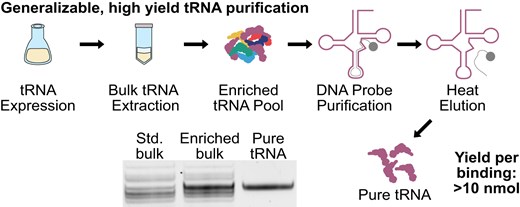
Graphical abstract showing a tRNA purification workflow: tRNA expression to bulk extraction to enriched pool to DNA probe purification to heat elution, with gel image comparing standard bulk, enriched bulk, and pure tRNA bands; yield exceeds 10 nmol per binding

Purification of post-transcriptionally modified tRNAs for enhanced cell-free translation systems

Kalb, Evan M; Alejo, Jose L; Dias-Fields, Leticia; Knudson, Isaac; Davisson, Joshua A; Maldonado, Efren; Chattrakun, Kanokporn; Lin, Shangsi; Lee, Jung Yeon; He, Tianchen;

Nucleic Acids Research (2026) · doi:10.1093/nar/gkag208

2025 Link to heading
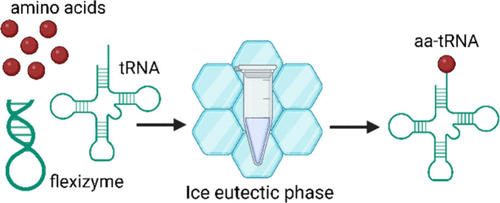
a graphical abstract showing amino acids/tRNA/flexizymes going through an ice eutectic phase intermediate, generating aa-tRNA

High yield, low magnesium flexizyme reactions in a water-ice eutectic phase

Joshua Davisson, Jose Alejo, Mace Blank, Evan Kalb, Angelin Prasad, Isaac Knudson, Alanna Schepartz, Aaron E Engelhart, Katarzyna P Adamala

Biochemistry (2025) · doi: 10.1021/acs.biochem.5c00371
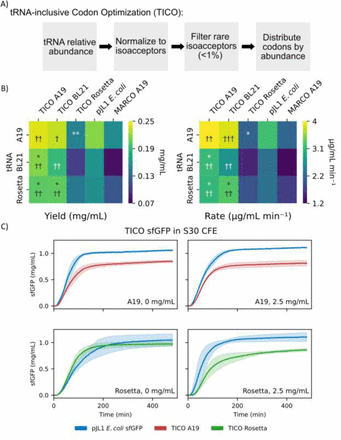
Multi-panel figure showing the TICO (tRNA-inclusive Codon Optimization) approach: A) workflow for normalizing tRNA abundance and filtering rare codons; B) heat maps comparing sfGFP synthesis yield and rate across TICO A19, BL21, Rosetta, pJL1, and MARCO tRNA sources; C) real-time fluorescence traces of sfGFP synthesis in S30 cell-free extract

An Expanded Repertoire of tRNA Sources for Cell-Free Protein Synthesis

Kalb, Evan M; Vincent, Russel M; Engelhart, Aaron E; Church, George M; Adamala, Katarzyna P;

bioRxiv (2025) · doi:10.1101/2025.08.20.671396
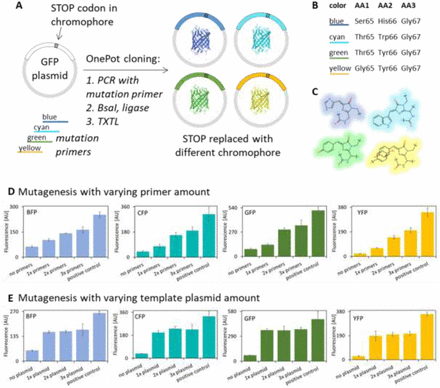
Multi-panel figure showing one-pot chromophore replacement in GFP variants: A) PCR mutagenesis schematic replacing a STOP codon with chromophore codons for BFP/CFP/GFP/YFP using mutation primers, BsaI, and TXTL; B) chromophore amino acid table; C) 3D chromophore structures; D–E) bar graphs of fluorescence with varying primer and template amounts

One-pot cloning and protein expression platform for genetic engineering

Sato, Wakana; Sharon, Judee; Cash, Brock; Deich, Christopher; Gaut, Nathaniel J; Heili, Joseph; Engelhart, Aaron E; Adamala, Katarzyna P;

bioRxiv (2025) · doi:10.1101/2025.08.28.672974
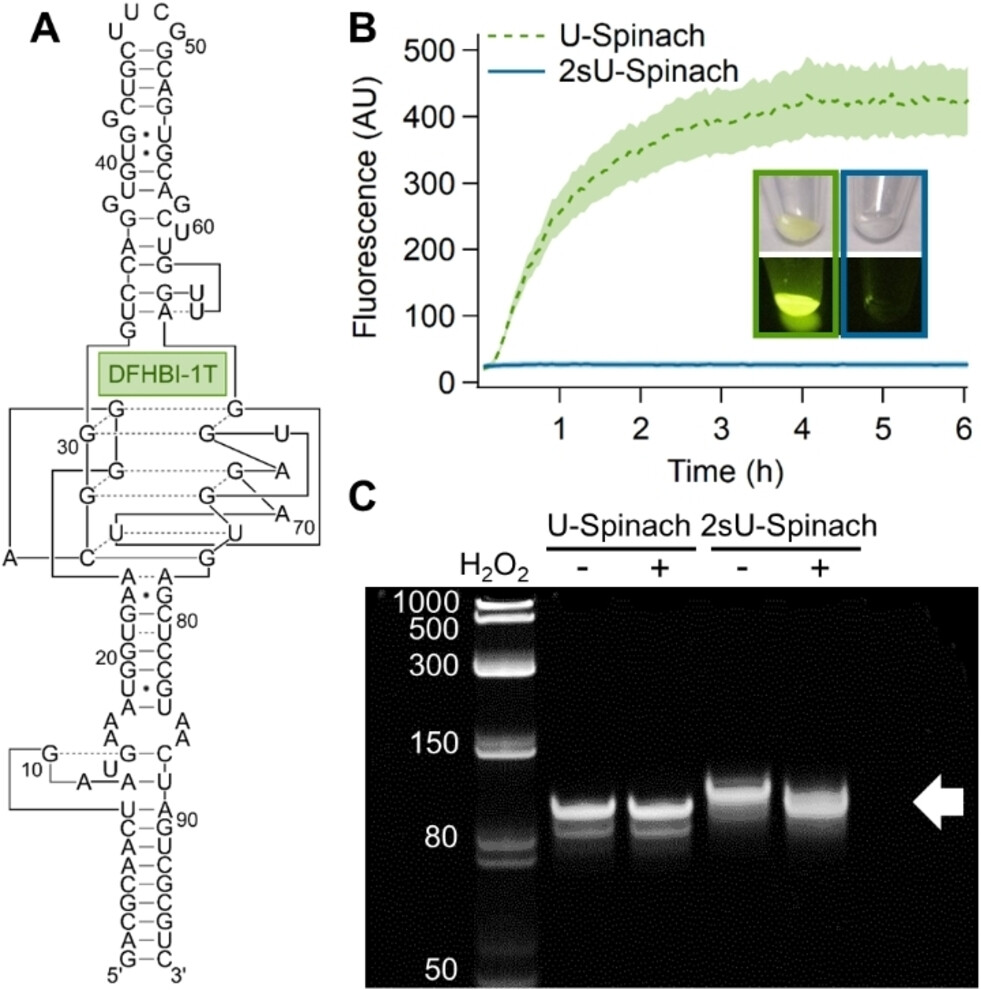
Three-panel figure on oxidative RNA uncaging: A) secondary structure of Spinach aptamer showing DFHBI-1T binding site and 2-thiouridine (2sU) cage position; B) fluorescence recovery curves of U-Spinach (dashed) vs caged 2sU-Spinach (solid) over 6 h with H2O2; C) agarose gel confirming H2O2-dependent band shift of 2sU-Spinach

Activation of Caged Functional RNAs by An Oxidative Transformation

Heili JM, Adamala KP, Engelhart AE.

Chembiochem (2025) · doi:10.1002/cbic.202401056
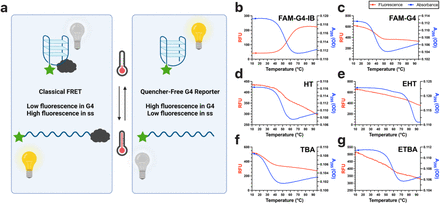
Quencher free fluorescence monitoring of G quadruplex folding

Quencher-Free Fluorescence Monitoring of G-Quadruplex Folding

Parada Z, Hoog TG, Adamala KP, Engelhart AE.

ACS Omega (2025) · doi:10.1101/2024.01.31.578026

2024 Link to heading
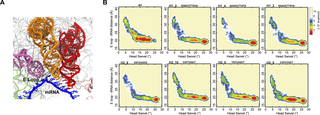
A diagram of ribosome translocation and associated graphs

Alternate conformational trajectories in ribosome translocation

Alejo JL, Girodat D, Hammerling MJ, Willi JA, Jewett MC, Engelhart AE, Adamala KP.

PLoS Comput Biol (2024) · doi:10.1371/journal.pcbi.1012319
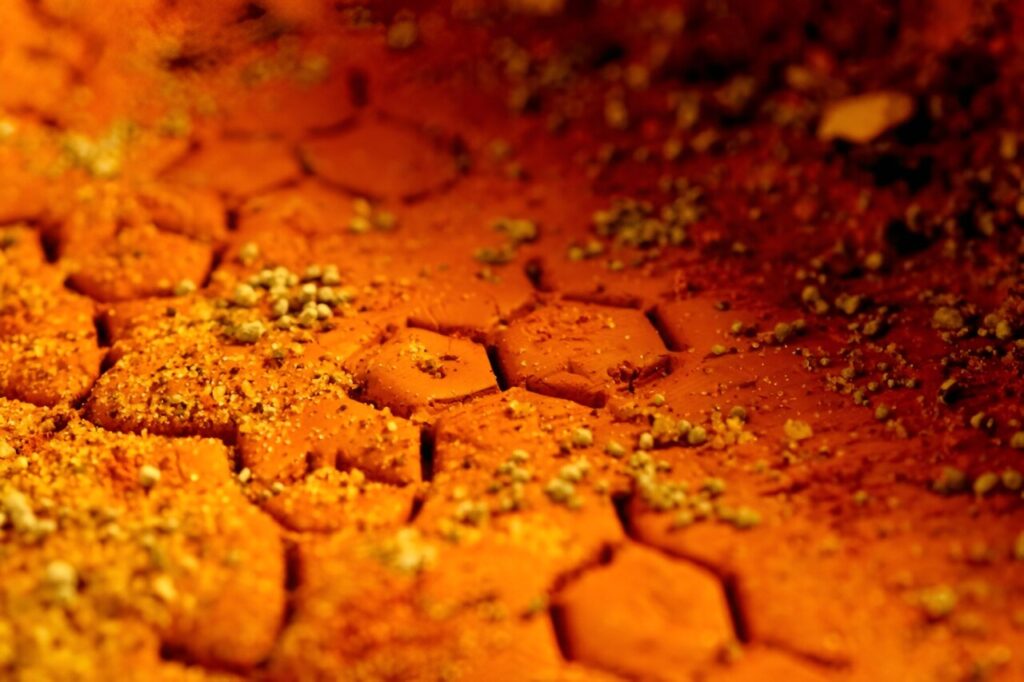
Close-up photograph of red-orange desiccated soil with hexagonal cracking patterns and mineral granules, resembling evaporite deposits analogous to Martian surface conditions

Emergent ribozyme behaviors in oxychlorine brines indicate a unique niche for molecular evolution on Mars

Tanner G. Hoog, Matthew R. Pawlak, Nathaniel J. Gaut, Gloria C. Baxter, Thomas A. Bethel, Katarzyna P. Adamala & Aaron E. Engelhart

Nature Communications (2024) · doi:10.1038/s41467-024-48037-2
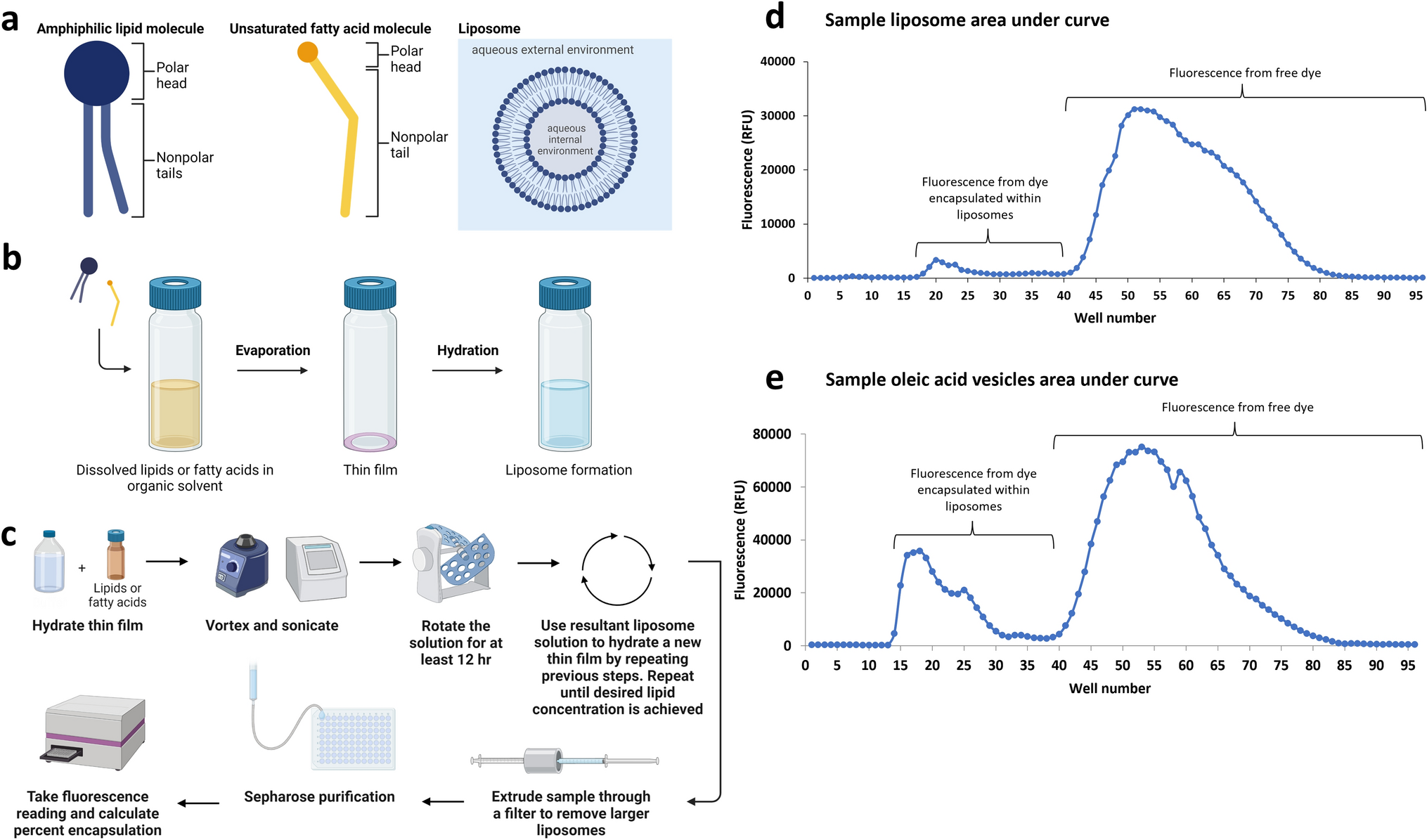
Figure panels showing increased encapsulation in sequentially hydrated liposomes

Sequential gentle hydration increases encapsulation in model protocells

EM Gehlbach, AO Robinson, AE Engelhart, KP Adamala

Discover Life (2024) · doi:10.1007/s11084-024-09645-6
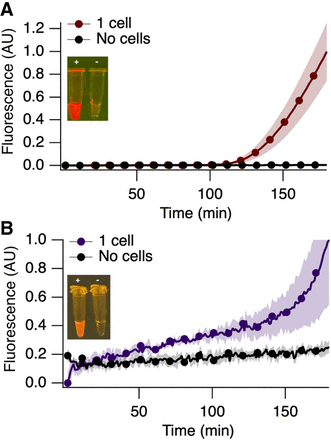
real-time fluorescence traces showing detection of bacteria at single-cell levels with the PACRAT system

PACRAT: Pathogen detection with aptamer-observed cascaded recombinase polymerase amplification-in vitro transcription

Pavana Khan, Lauren Aufdembrink, Katarzyna P Adamala, Aaron Engelhart

RNA (2024) · doi:10.1261/rna.079891.123
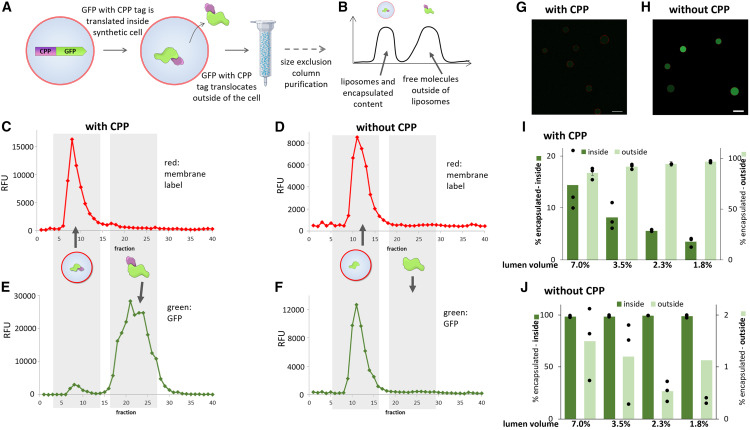
figure panels demonstrating exchange of protein and nucleic acid payloads from and between synthetic minimal cells

Controlled exchange of protein and nucleic acid signals from and between synthetic minimal cells

Joseph M Heili, Kaitlin Stokes, Nathaniel J Gaut, Christopher Deich, Jose Gomez-Garcia, Brock Cash, Matthew R Pawlak, Aaron E Engelhart, Katarzyna P Adamala

Cell Systems (2024) · doi:10.1016/j.cels.2023.12.008

2023 Link to heading
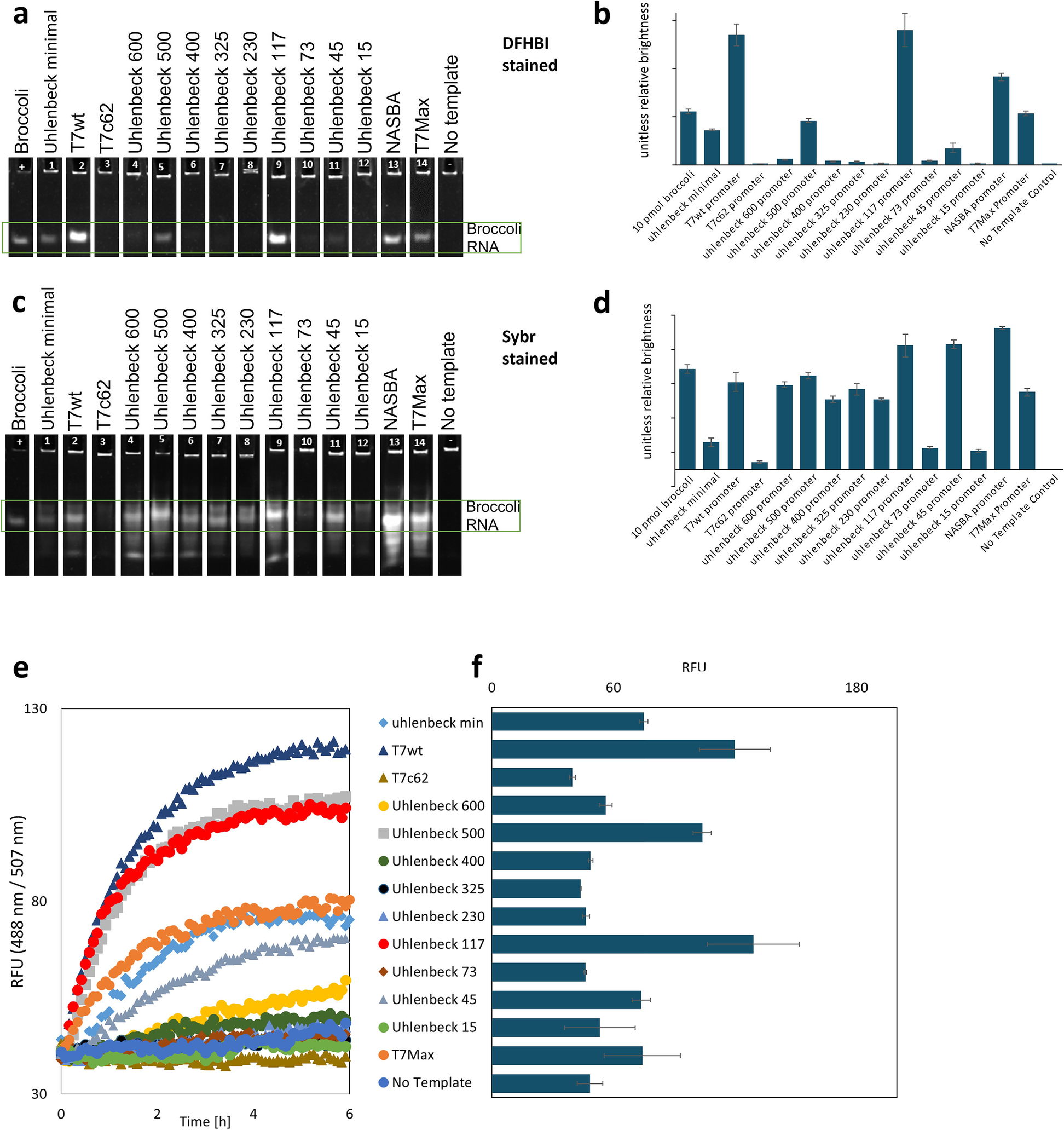
gels and bar graphs showing increased yields of transcriptions with the T7Max system

T7Max transcription system

Christopher Deich, Brock Cash, Wakana Sato, Judee Sharon, Lauren Aufdembrink, Nathaniel J Gaut, Joseph Heili, Kaitlin Stokes, Aaron E Engelhart, Katarzyna P Adamala

J Biol Eng (2023) · doi:10.1186/s13036-023-00323-1
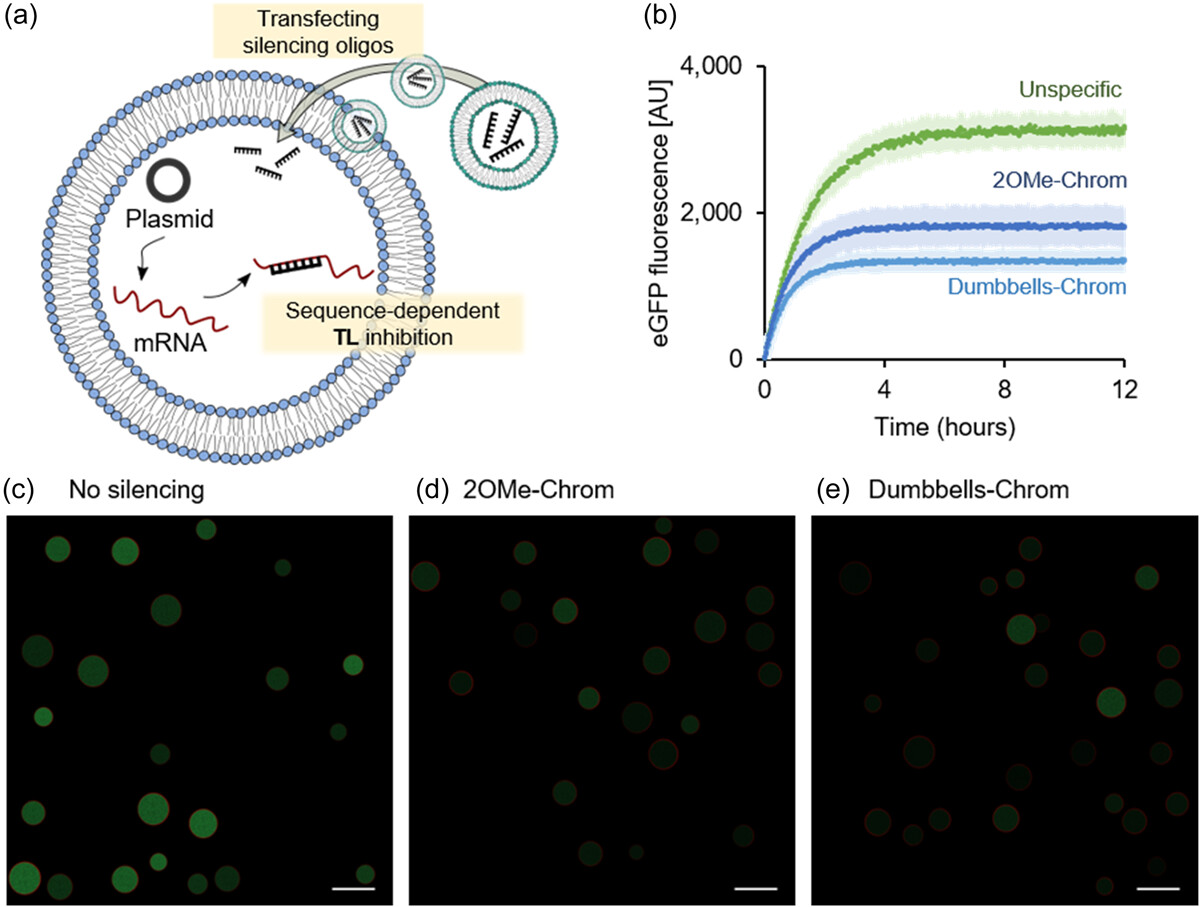
a cartoon, real-time fluorescence traces, and microscopy images showing gene silencing in synthetic cells

A gene expression control technology for cell‐free systems and synthetic cells via targeted gene silencing and transfection

Wakana Sato, Melanie Rasmussen, Nathaniel Gaut, Mahima Devarajan, Kaitlin Stokes, Christopher Deich, Aaron E Engelhart, Katarzyna P Adamala

Biotechnology and bioengineering (2023) · doi:10.1002/bit.28422
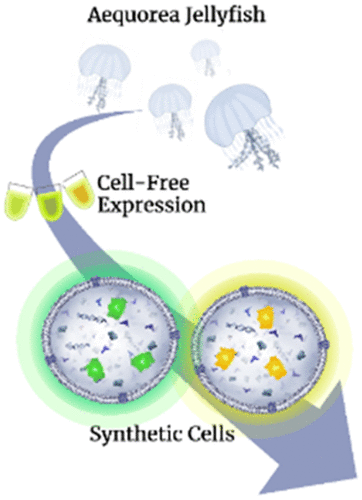
a graphical abstract showing jellyfish, cell-free expresion mixtures with glowing tubes, and liposome synthetic cells with glowing proteins

New Aequorea Fluorescent Proteins for Cell-Free Bioengineering

C Deich, NJ Gaut, W Sato, AE Engelhart, KP Adamala

ACS Synthetic Biology (2023) · doi:10.1021/acssynbio.3c00057
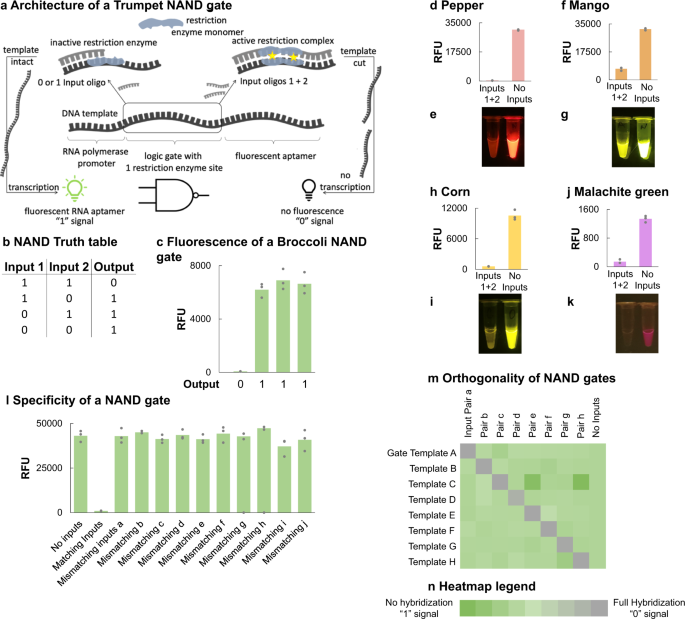
figure panels demonstrating fluorescence readouts of biocomputing using the Trumpet system

Trumpet is an operating system for simple and robust cell-free biocomputing

Judee A. Sharon, Chelsea Dasrath, Aiden Fujiwara, Alessandro Snyder, Mace Blank, Sam O’Brien, Lauren M. Aufdembrink, Aaron E. Engelhart & Katarzyna P. Adamala

Nature communications (2023) · doi:10.1038/s41467-023-37752-x
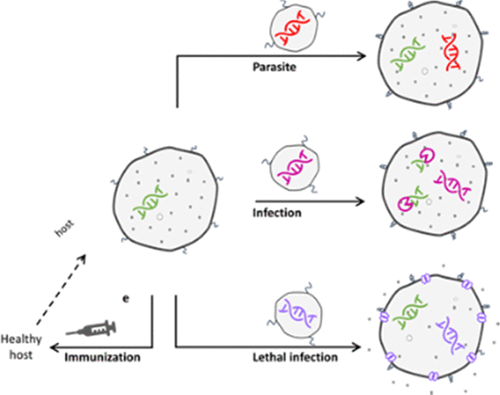
Schematic diagram of three outcomes when synthetic minimal cells interact: (top row) parasite—small cell inserts DNA into a host cell; (middle row) infection—replicating genetic material transfers between cells; (bottom row) immunization by injection followed by lethal infection (Parasites, infections, and inoculation in synthetic minimal cells, ACS 2022)

Parasites, infections and inoculation in synthetic minimal cells

Brock Cash, Nathaniel J. Gaut, Christopher Deich, Laura L. Johnson, Aaron E. Engelhart, Katarzyna P. Adamala

ACS Omega (2023) · doi:10.1021/acsomega.2c07911

2022 Link to heading
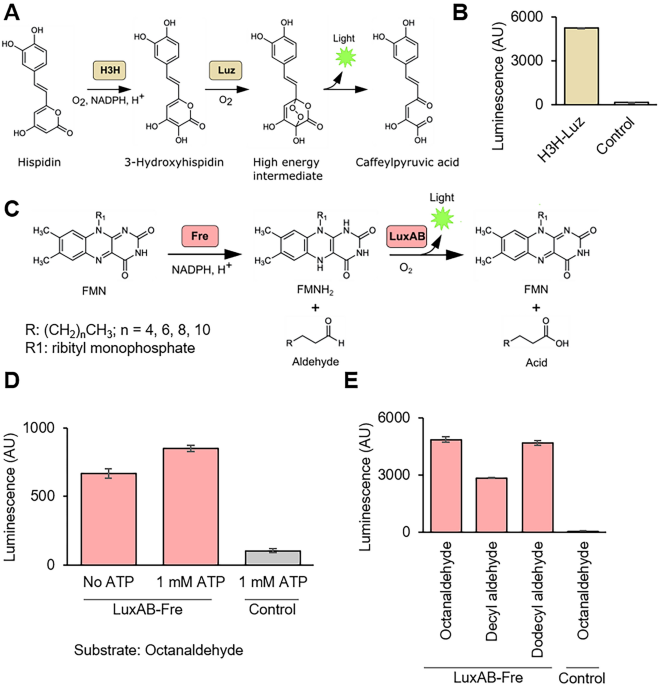
Multi-panel figure on expanded luciferase reporters in cell-free systems: A) chemical structures and bioluminescence reactions of D-luciferin and coelenterazine substrates; B) bioluminescence bar graph comparing LuxAB-Fire vs GFP; C) fatty acid monophosphate substrate structures; D–E) bar graphs comparing luminescence across ATP concentrations and luciferase variants

Expanding luciferase reporter systems for cell-free protein expression

Wakana Sato, Melanie Rasmussen, Christopher Deich, Aaron E Engelhart, Katarzyna P Adamala

Sci Rep (2022) · doi:10.1038/s41598-022-15624-6
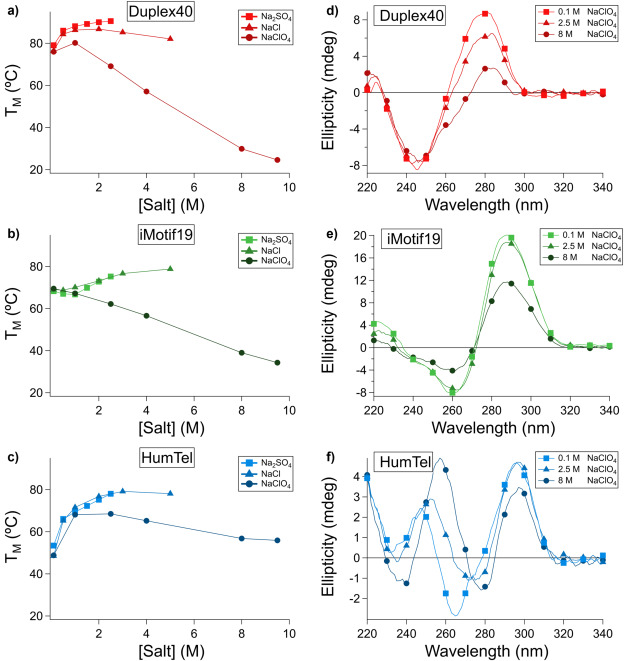
figures showing that a DNA duplex and i-motif exhibit significant destabilization of secondary structure by sodium perchlorate, a chaotropic salt, while the human telomere G-quadruplex exhibits minimal destabilization

DNA G-quadruplexes are uniquely stable in the presence of denaturants and monovalent cations

Tanner G Hoog, Matthew R Pawlak, Benjamin F Bachan, Aaron E Engelhart

Biochemistry and Biophysics Reports (2022) · doi:10.1016/j.bbrep.2022.101238
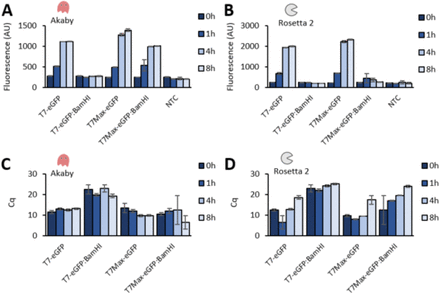
figures showing that the akaby cell-free expression system exhibits higher yield with linear templates compared to Rosetta

Akaby-Cell-free protein expression system for linear templates

Sato W, Sharon J, Deich C, Gaut N, Cash B, Engelhart AE, Adamala KP.

PLoS One (2022) · doi:10.1101/2021.11.03.467179
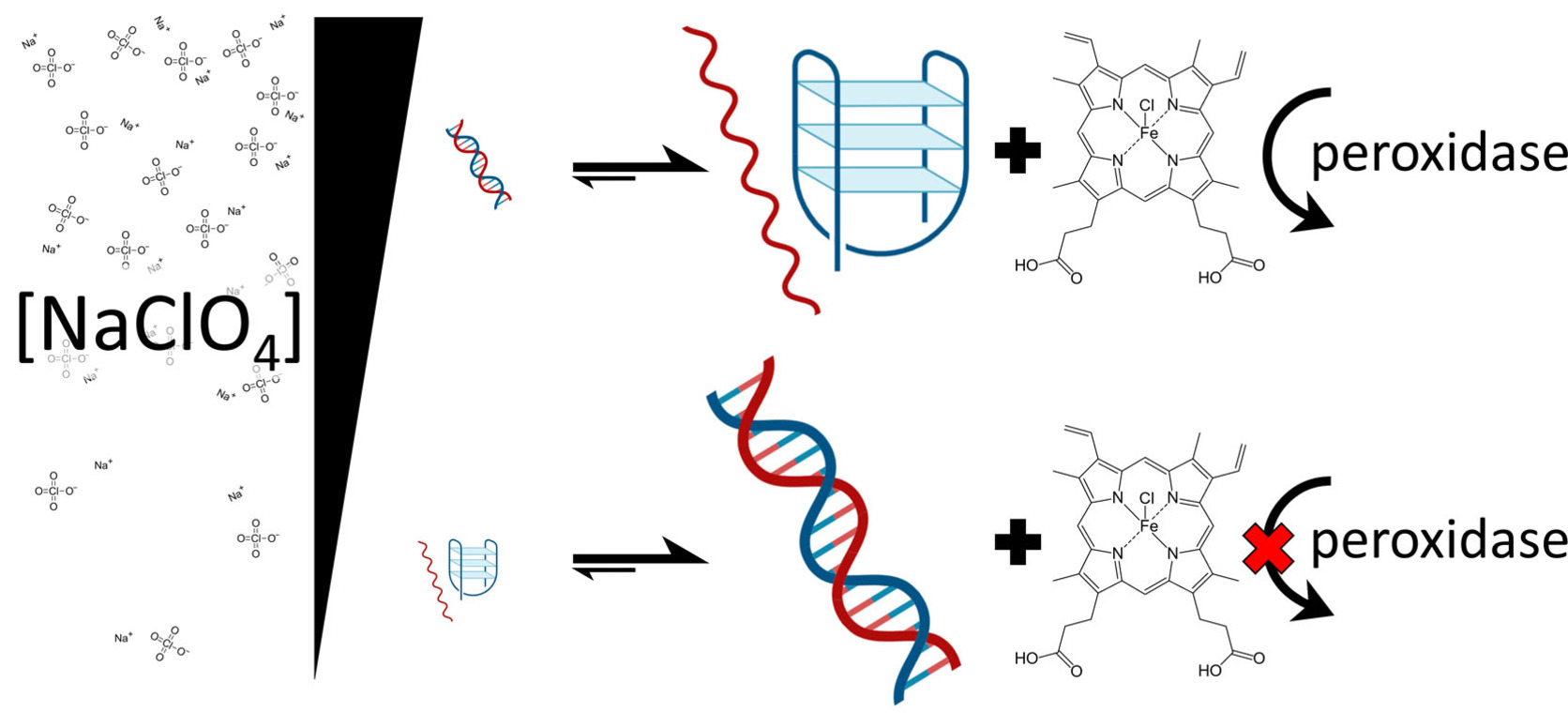
a graphical abstract for Switchable DNA-Based Peroxidases Controlled by a Chaotropic Ion, showing switching from a DNA duplex to a heme-quadruplex complex with peroxidase activity with increasing NaClO4, illustrated by a wedged graphic

Switchable DNA-Based Peroxidases Controlled by a Chaotropic Ion

Tanner G Hoog, Matthew R Pawlak, Lauren M Aufdembrink, Benjamin R Bachan, Matthew B Galles, Nicholas B Bense, Katarzyna P Adamala, Aaron E Engelhart

ChemBioChem (2022) · doi:10.1002/cbic.202200090
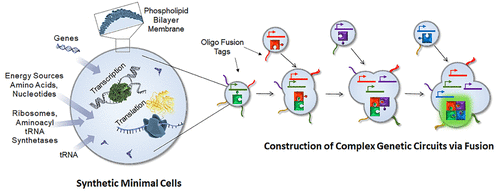
a graphical abstract showing Programmable Fusion and Differentiation of Synthetic Minimal Cells, illustrating DNA-guided fusion between liposomes for joining of compartments

Programmable Fusion and Differentiation of Synthetic Minimal Cells

Nathaniel J Gaut, Jose Gomez-Garcia, Joseph M Heili, Brock Cash, Qiyuan Han, Aaron E Engelhart, Katarzyna P Adamala

ACS Synth. Biol (2022) · doi:10.1021/acssynbio.1c00519

2021 Link to heading
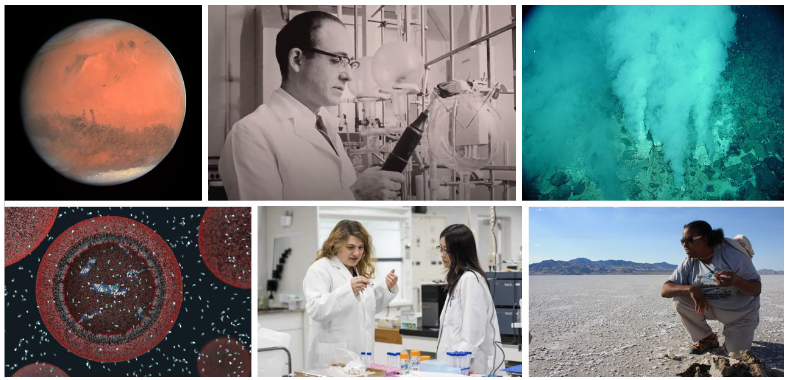
Figure 1 from 'Astrobiology on habitable worlds'. Clockwise from upper left: True-color image of Mars captured by the OSIRIS camera instrument on the Rosetta spacecraft in 2007; Miller-Urey spark discharge experiment (photo credit: WGBH); hydrothermal white smoker, Champagne Vent, near NW summit of Eifuku Seamount (photo credit: NOAA); Astrobiologist K. Lynch of the Lunar Planetary Institute performing field studies in the Pilot Valley Basin, Utah, a planetary analog site (credit: Kennda Lynch); Irena Mamajanov & Yuki Suna, of the Earth-Life Science Institute, Tokyo, Japan, conduct prebiotic chemistry laboratory experiments (credit: Nerissa Escanlar); schematic illustration of an RNA world in protocells (credit: Janet Iwasa, U. Utah).

Astrobiology on habitable worlds: The case for considering prebiotic chemistry in mission design

Aaron Engelhart, Jennifer G Blank, Christopher Carr, Henderson James Cleaves, and Kennda Lynch

Planetary Science and Astrobiology Decadal Survey 2023-2032 (2021) · doi:10.3847/25c2cfeb.52e0f294
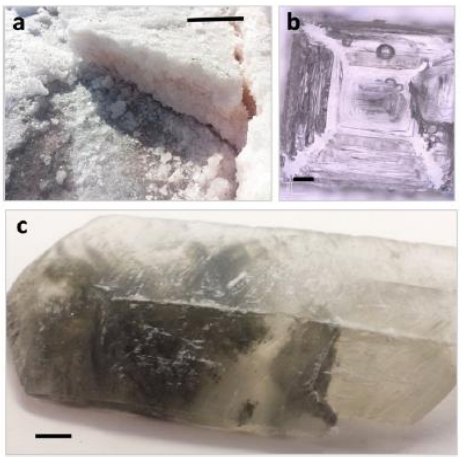
Fig. 2 from 'Salty Environments' (Adopted from Perl and Baxter, 2020) Evaporite minerals at the north arm of Great Salt Lake. (a) Halite terrace forming as the north arm waters of Great Salt Lake recede in summer desiccating conditions. Evaporation may lead to entrapped pigmented halophilic microorganisms as the lakeshore is desiccated, which results in pink halite. Note the layered pigmented sections below non-pigmented material (Perl 2019). The scale bar represents ~12 cm. (b) A typical halite hopper crystal collected from the north arm of the lake. Fluid inclusions are evident in the crystalline structure. The scale bar represents 0.10 cm. (c) Gypsum (CaSO₄·2H₂O) crystal retrieved from the sediment of evaporated brine from the north arm shore, showing entombed Fe-rich clays within the transparent mineral matrix. The scale bar represents ~1 cm. During precipitation, these minerals tend to align vertically and perpendicular to saturated sediments and fluids needed for crystal growth

Salty Environments: The importance of evaporites and brine environments as habitats and preservers of biosignatures

Scott Perl, Solmaz Adeli, Chhandak Basu, Bonnie K. Baxter, Jeff Bowman, Eric Boyd, Morgan Cable, Aaron J. Celestian, Charles S. Cockell, Frank A. Corsetti, Kate L. Craft, Aaron Engelhart, Alberto G. Fairen, Suniti Karunatillake, Kennda Lynch, Sally Potter-McIntyre, Frances Rivera-Hernandez, Mark Schneegurt, Susanne Schwenzer, Svetlana Shkolyar, Bethany Theiling, Brian Wade, and Jon Zaloumis

Planetary Science and Astrobiology Decadal Survey 2023-2032 (2021) · doi:10.3847/25c2cfeb.d0fffbba

2020 Link to heading
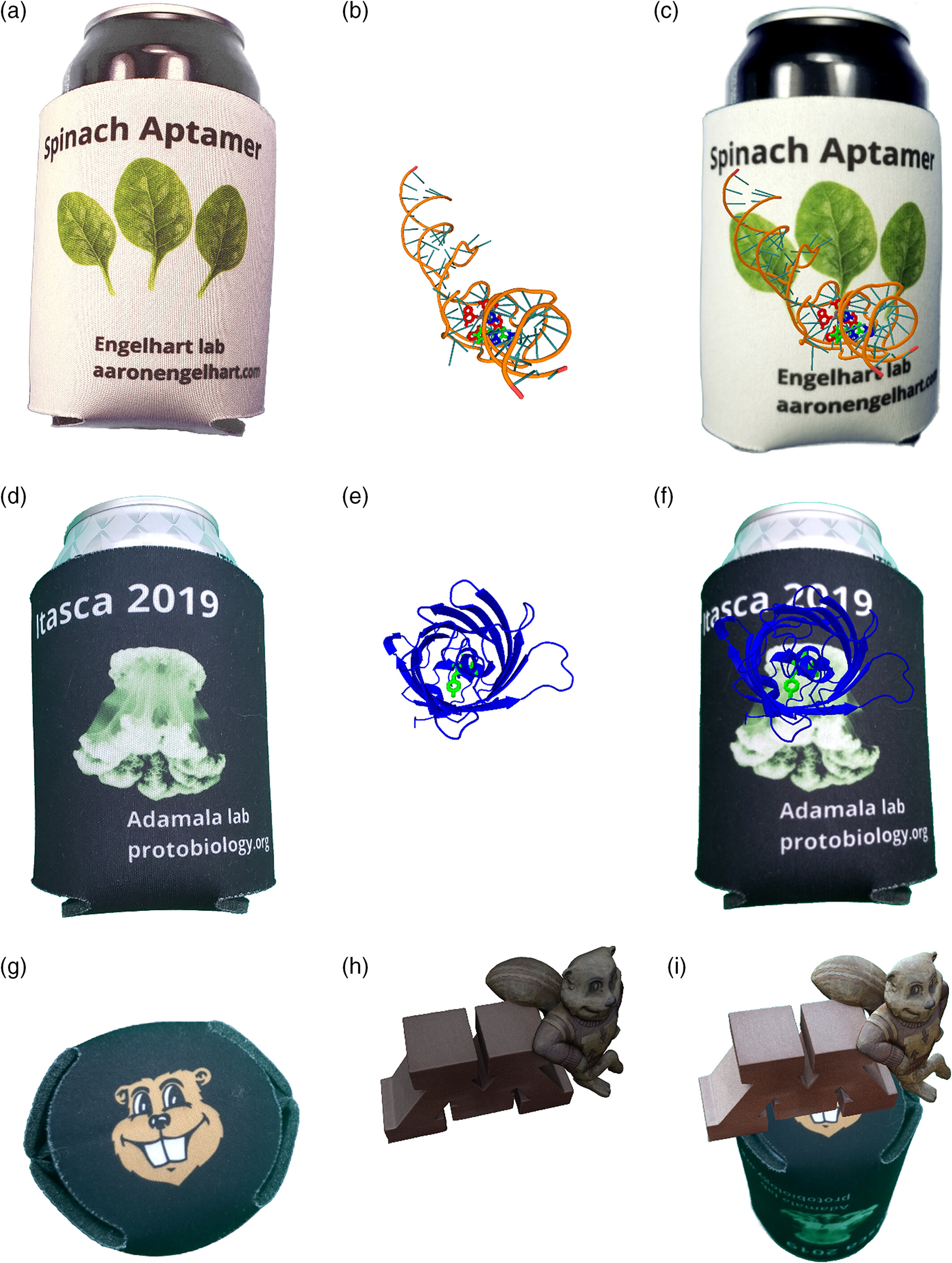
Nine-panel figure demonstrating smartphone AR for structural biology education: beverage can koozies printed with Spinach aptamer (a–c) and jellyfish Aequorea GFP (d–f) molecular designs shown before and after AR overlay, plus 3D-printed molecular models (g–i) with their AR-rendered structures

Rapid deployment of smartphone‐based augmented reality tools for field and online education in structural biology

Tanner G Hoog, Lauren M Aufdembrink, Nathaniel J Gaut, Rou‐Jia Sung, Katarzyna P Adamala, Aaron E Engelhart

Biochemistry and Molecular Biology Education (2020) · doi:10.1002/bmb.21396
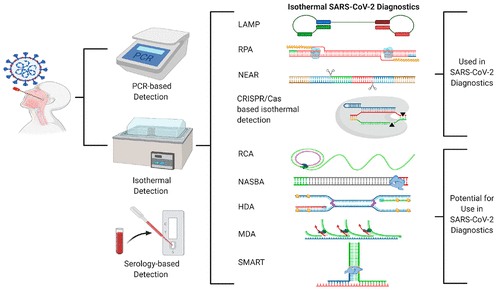
Overview graphic of isothermal SARS-CoV-2 diagnostics: schematic diagrams of eight amplification methods (LAMP, RPA, NEAR, CRISPR/Cas, RCA, NASBA, HDA, MDA, SMART) categorized as currently used or with potential for use in SARS-CoV-2 detection

Isothermal SARS-CoV-2 diagnostics: tools for enabling distributed pandemic testing as a means of supporting safe reopenings

Pavana Khan, Lauren M Aufdembrink, Aaron E Engelhart

ACS Synth. Biol (2020) · doi:10.1021/acssynbio.0c00359
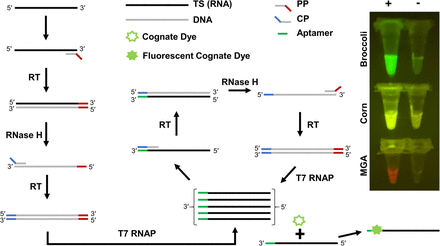
Reaction schematic and fluorescence readout for multiplexed isothermal pathogen detection: RNA template undergoes reverse transcription, RNase H digestion, second RT, and T7 RNAP transcription to generate fluorescent aptamers (Broccoli, Corn, MGA), with sample tube photos showing aptamer-specific fluorescence

Highly specific, multiplexed isothermal pathogen detection with fluorescent aptamer readout

Lauren M Aufdembrink, Pavana Khan, Nathaniel J Gaut, Katarzyna P Adamala, Aaron E Engelhart

RNA (2020) · doi:10.1261/rna.075192.120

2019 Link to heading
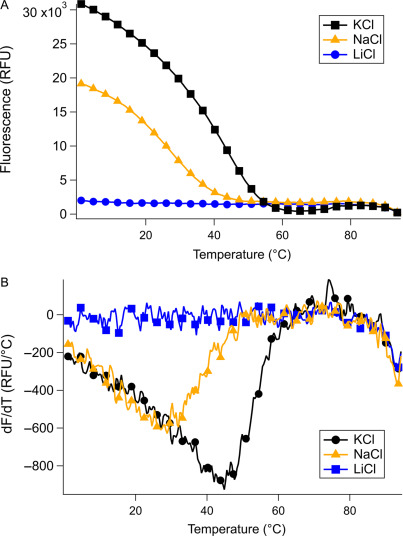
Figure 2 from 'methods for thermal denaturation'. A graphic showing fluorescence data of broccoli aptamer melting in different salts (top), and the first derivative of the same (bottom)

Methods for thermal denaturation studies of nucleic acids in complex with fluorogenic dyes

Lauren M Aufdembrink, Tanner G Hoog, Matthew R Pawlak, Benjamin F Bachan, Joseph M Heili, Aaron E Engelhart

Methods in Enzymology (2019) · doi:10.1016/bs.mie.2019.05.029

2018 Link to heading
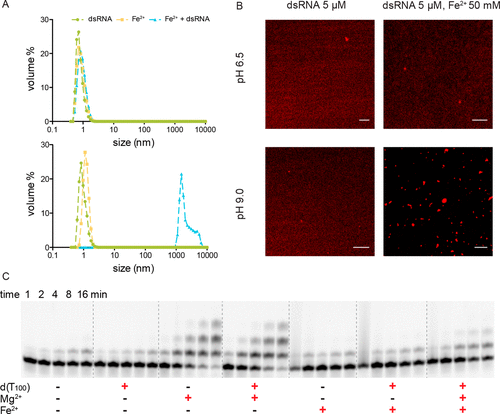
Three-panel figure: A) dynamic light scattering size distributions for dsRNA and Fe2+ alone vs combined, showing condensate formation; B) fluorescence microscopy of RNA condensates at pH 6.5 and 9.0 with and without 50 mM Fe2+; C) gel time course (1–16 min) of nonenzymatic RNA copying with poly-dT template using Mg2+ or Fe2+ as catalyst

Catalysis of template-directed nonenzymatic RNA copying by Iron (II)

Lin Jin, Aaron E Engelhart, Weicheng Zhang, Katarzyna Adamala, Jack W Szostak

J. Am. Chem. Soc (2018) · doi:10.1021/jacs.8b09617
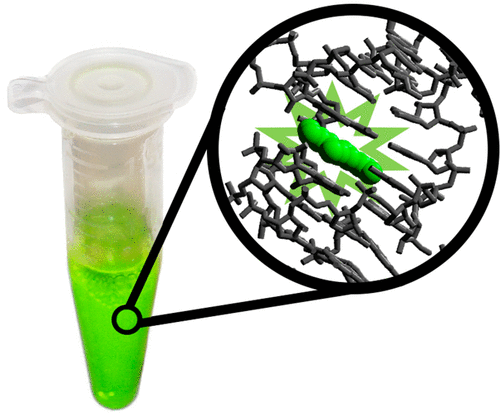
Illustration for the Broccoli aptamer J. Chem. Ed. lab exercise: a green-fluorescing microcentrifuge tube containing an in vitro transcription reaction, with a molecular zoom-in showing the Broccoli RNA aptamer (gray stick model) bound to a DFHBI fluorophore (green)

Real-Time Visualization of in Vitro Transcription of a Fluorescent RNA Aptamer: An Experiment for the Upper-Division Undergraduate or First-Year Graduate Laboratory

Joseph M Heili, Jose Gomez-Garcia, Nathaniel J Gaut, Brock W Cash, Lauren M Aufdembrink, Brent A Heffron, Joshua D Shirley, Erin E Carlson, Katarzyna P Adamala, Aaron E Engelhart

Journal of Chemical Education (2018) · doi:10.1021/acs.jchemed.7b00735
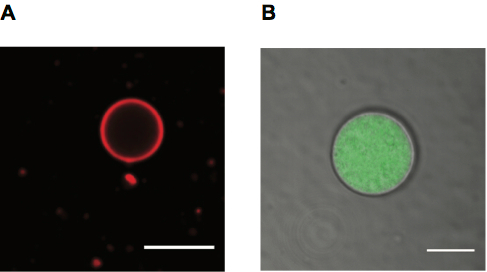
Fluorescence microscopy of fatty acid liposomes: A) single large unilamellar vesicle with red Rh-DHPE membrane label on a black background; B) same liposome with green fluorescent encapsulated contents shown in bright-field overlay, demonstrating successful cargo encapsulation

Preparation, Purification, and Use of Fatty Acid-containing Liposomes

Aaron E. Engelhart

Journal of Visualized Experiments (2018) · doi:10.3791/57324

2017 Link to heading
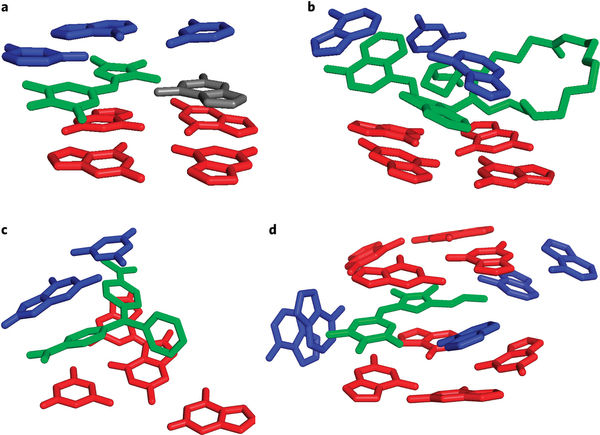
Four structural panels (a-d) showing 3D molecular models of G-quadruplex RNA aptamer conformations: apo form with displaced dye (gray, panel a) and three ligand-bound conformations (panels b-d) with fluorescent dye molecules (blue/green) stacking on red G-tetrad layers (RNA imaging paper, Nature Chemical Biology 2017 News and Views)

RNA imaging: A tale of two G-quadruplexes

Aaron E. Engelhart

Nature Chemical Biology (2017) · doi:10.1038/nchembio.2492

2016 Link to heading
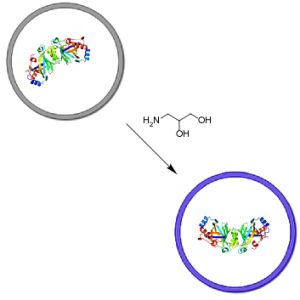
Schematic of collaboration between primitive cell membranes and soluble catalysts: a fatty acid vesicle (gray membrane) containing RNA gains a 3-amino-propane-1,2-diol molecule and transforms into a vesicle with a purple oleic acid membrane, representing activation of an encapsulated ribozyme by a membrane-compatible amino acid

Collaboration between primitive cell membranes and soluble catalysts

Katarzyna P. Adamala, Aaron E. Engelhart (joint first author), and Jack W. Szostak

Nature Communications (2016) · doi:10.1038/ncomms11041
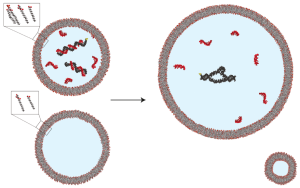
Primitive cell homeostasis diagram: vesicle growth dilutes inhibitory oligonucleotides and activates an encapsulated ribozyme (Engelhart, Adamala, Szostak, Nature Chemistry 2016)

A simple physical mechanism enables homeostasis in primitive cells

Aaron E. Engelhart, Katarzyna P. Adamala, and Jack W. Szostak

Nature Chemistry (2016) · doi:10.1038/nchem.2475

2015 Link to heading
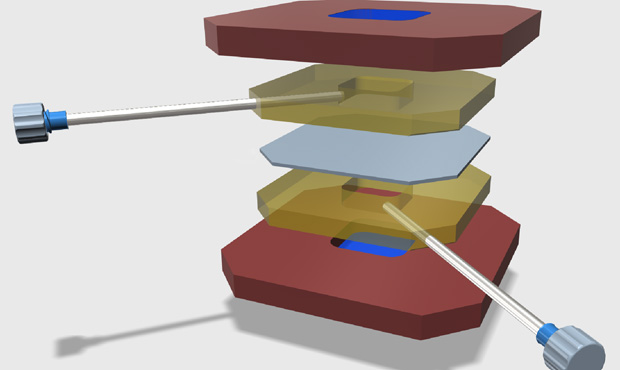
Exploded 3D diagram of a liposome dialyzer device: alternating red and gold plates with a central gray dialysis membrane, connected by two syringe needles, used for preparing high-value small-volume liposome formulations

Construction of a liposome dialyzer for the preparation of high-value, small-volume liposome formulations

Nature Protocols (2015) · doi:10.1038/nprot.2015.054
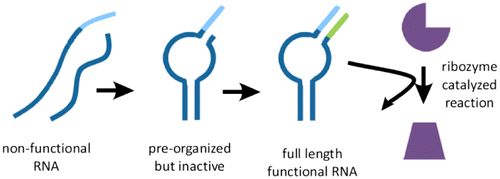
Schematic of non-enzymatic RNA primer extension: non-functional RNA strands hybridize to form a pre-organized but inactive complex, which extends to a full-length functional RNA capable of ribozyme-catalyzed reactions

Generation of functional RNAs from inactive oligonucleotide complexes by non-enzymatic primer extension

JACS (2015) · doi:10.1021/ja511564d

2014 Link to heading
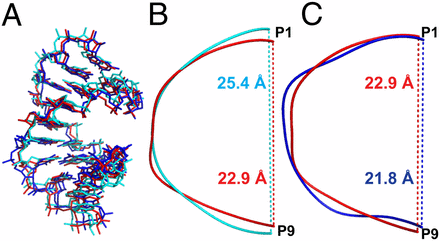
Structural comparison of 2'-5' vs 3'-5' RNA linkages: A) overlaid crystal structures of three RNA duplexes; B–C) end-to-end curvature plots (P1 to P9) showing 2'-5'-linked RNA (cyan, 25.4 Å) is more extended than 3'-5'-linked forms (red 22.9 Å, blue 21.8 Å)

Structural insights into the effects of 2′-5′ linkages on the RNA duplex

PDB Entries: 4MS9 , 4MSB , 4MSR

PNAS (2014) · doi:10.1073/pnas.1317799111
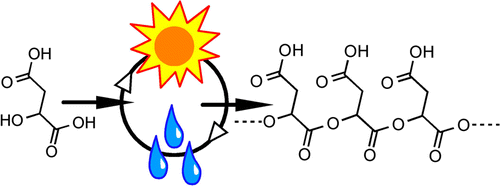
Chemical schematic of prebiotic polyester formation via wet-dry cycles: tartaric acid monomers undergo esterification driven by alternating sun (drying) and water drops (rewetting) to produce far-from-equilibrium polyester chains

Ester formation and hydrolysis during wet–dry cycles: Generation of far-from-equilibrium polymers in a model prebiotic reaction

Macromolecules (2014) · doi:10.1021/ma402256d

2013 Link to heading
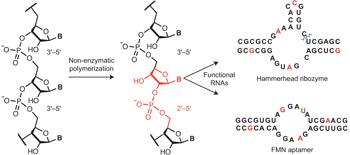
Graphical abstract showing that RNA strands with mixed 2'-5'/3'-5' backbone linkages (left, chemical structure) can fold into functional RNAs including a hammerhead ribozyme and FMN aptamer (right, secondary structures), demonstrating tolerance for backbone heterogeneity

Functional RNAs exhibit tolerance for non-heritable 2′–5′ versus 3′–5′ backbone heterogeneity

Nature Chemistry (2013) · doi:10.1038/nchem.1623

2012 Link to heading
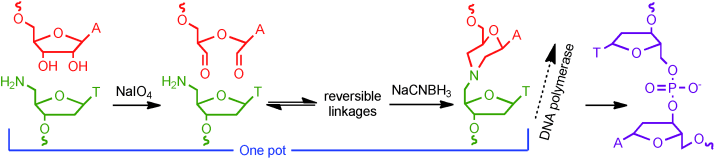
Reaction scheme for one-pot nonenzymatic DNA ligation: nucleosides are oxidized with NaIO4 to form reversible Schiff base linkages, then reduced with NaCNBH3 to yield stable linkages usable by DNA polymerase

Nonenzymatic ligation of DNA with a reversible step and a final linkage that can be used in PCR

ChemBioChem (2012) · doi:10.1002/cbic.201200167

2011 Link to heading
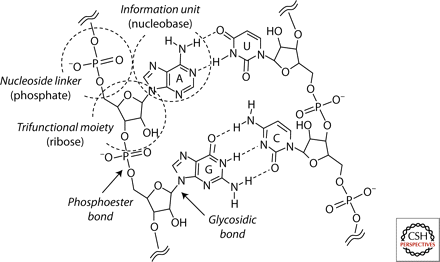
Structural diagram of a primitive genetic polymer strand annotated with key chemical features: information unit (nucleobase), nucleoside linker (phosphate), trifunctional moiety (ribose), phosphoester bond, and glycosidic bond

Primitive genetic polymers

Cold Spring Harbor Perspectives in Biology (2011) · doi:10.1101/cshperspect.a002196

2010 Link to heading
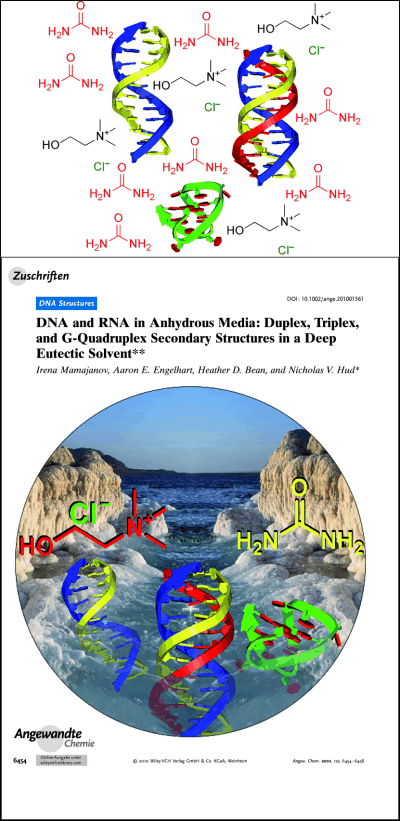
Angewandte Chemie cover and graphical abstract showing DNA and RNA secondary structures (duplex, triplex, and G-quadruplex in blue, red, green, and yellow) dissolved in a deep eutectic solvent of choline chloride and urea

DNA and RNA in anhydrous media: duplex, triplex, and G-Quadruplex secondary structures in a deep eutectic solvent

Angewandte Chemie (2010) · doi:10.1002/ange.201001561
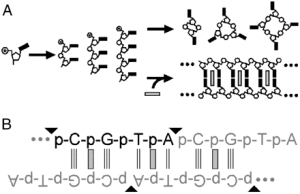
Two-panel schematic: A) intercalation promotes linear polymerization of oligonucleotides over cyclization, illustrated by stepwise growth from monomer to polymer; B) complementary base-pairing alignment of self-complementary oligonucleotide sequences in intercalation-mediated ligation

Intercalation as a means to suppress cyclization and promote polymerization of base-pairing oligonucleotides in a prebiotic world

PNAS (2010) · doi:10.1073/pnas.0914172107

2009 Link to heading
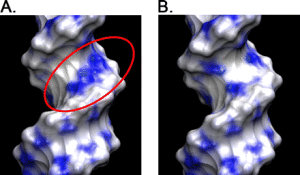
Electrostatic surface maps of DNA duplex: panel A highlights a bisulfite-reactive cytosine site (circled in red) in a conformational variant with altered groove geometry; panel B shows a normal B-form duplex surface for comparison

Conformational variants of duplex DNA correlated with cytosine-rich chromosomal fragile sites

J. Biol. Chem (2009) · doi:10.1074/jbc.m806866200
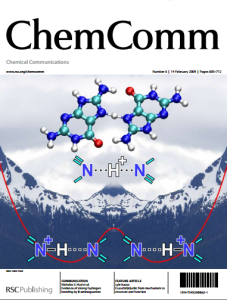
ChemComm journal cover featuring the 8-aminoguanine nucleobase structure showing enhanced self-pairing hydrogen bonds (N–H···N dashed lines) compared to guanine, set against a mountain and lake landscape

Evidence of strong hydrogen bonding by 8-aminoguanine

ChemComm (2009) · doi:10.1039/b818409g
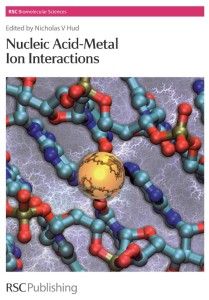
Cover of the RSC book 'Nucleic Acid-Metal Ion Interactions' edited by Nicholas V Hud, featuring a 3D molecular visualization of a nucleic acid helix surrounding a central gold metal ion

Metal ion interactions with G-Quadruplex structures

RSC Book Chapter (2009) · doi:10.1039/9781847558763-00118

Cover of the RSC book 'Nucleic Acid-Metal Ion Interactions' edited by Nicholas V Hud, featuring a 3D molecular visualization of a nucleic acid helix surrounding a central gold metal ion

Sequence-Specific DNA-Metal Ion Interactions

RSC Book Chapter (2009) · doi:10.1039/9781847558763-00075

2008 Link to heading
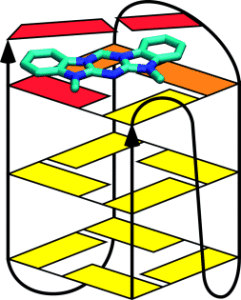
3D diagram of a selective G-quadruplex ligand: an azacyanine molecule (teal heterocyclic structure) stacks on the 5' face of a G-quadruplex DNA structure built from red G-tetrad layers and yellow sugar-phosphate backbone loops

Submicromolar, selective G-Quadruplex ligands from one pot: thermodynamic and structural studies of human telomeric DNA binding by azacyanines

ChemBioChem (2008) · doi:10.1002/cbic.200800234