Outreach
RNA in Space!
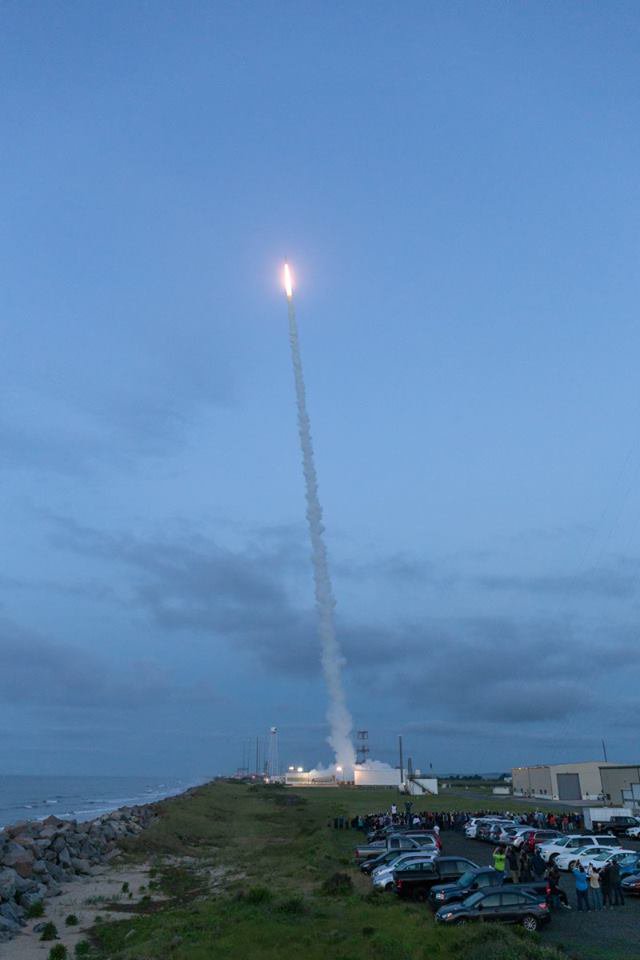
In 2017-2018, we advised a group of students and interns at several NASA sites participating in the RockSat-C 18 program. This talented team developed a payload for RNA transcription and cell-free protein expression with a 3D-printed imaging jig for reaction monitoring. The payload was succesfully launched in a Terrier Orion sounding rocket from NASA Wallops in June 2018, increasing the TRL of this project to 6. To our knowledge, these were the first fluorescent aptamer and cell-free experiments in spaceflight.
Work with Adamala lab.
Teaching Experiments from the Engelhart Lab
Coming Soon: RNA@OLLI!
Through the Osher Lifelong Learning Institute, we will offer a short course on RNA biology in 2026-2027! This class at OLLI, which targets lifelong learners age 50+, will cover “RNA as you might not have learned it,” covering advances in RNA biology in the last 35 years - including ribozymes, aptamers, and CRISPR.
Augmented Reality in RNA Education
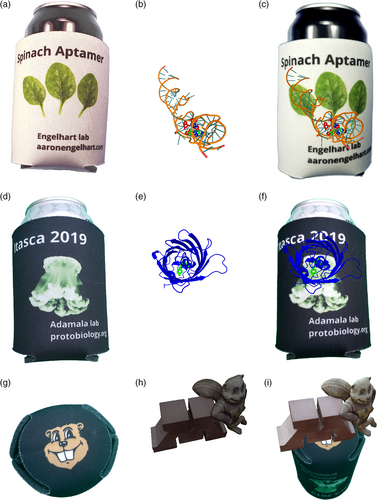
In our fluorescent aptamer module (see below “Fluorescent RNA Aptamers in Teaching” section), we often try new ways of showcasing RNA research we think it’d be fun to try out. One year, we did a module on the structural biology of these aptamers. In this module, we took printed drink koozies with “trackers” that an augmented reality app could recognize, and then bring up a 3D structure on their phones. We published this in Rapid deployment of smartphone-based augmented reality tools for field and online education in structural biology.
Work with Adamala lab.
Fluorescent RNA Aptamers in Teaching
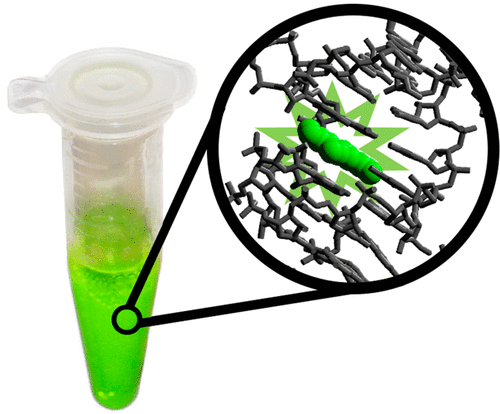
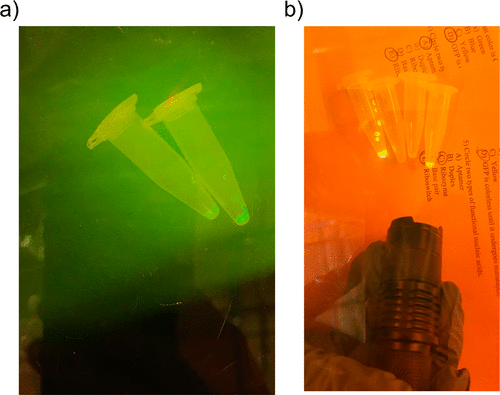
We teach a short course at Itasca State Park in Northern Minnesota at the headwaters of the Mississippi. Every year, incoming graduate students in the MCDB&G and BMBB programs transcribe some of the same fluorescent RNAs we use in the lab almost every day. Every year we’re pleasantly surprised how well it works - Itasca is a remote state park and not sterile or RNAse free. But students almost always get fluorescent aptamers at the end of the day! We published this in Real-Time Visualization of in Vitro Transcription of a Fluorescent RNA Aptamer: An Experiment for the Upper-Division Undergraduate or First-Year Graduate Laboratory.
Work with Adamala lab.
Brains On!
In April 2017, Prof. Kate Adamala and I were interviewed for Minnesota Public Radio’s Brains On! podcast and radio show about the first life on earth.
Teaching Experiments as a Trainee
During my undergraduate and graduate training, I was involved in the development of teaching experiments for two K-12 outreach programs.
I’m College Bound!

I’m College Bound! is a program my undergraduate research mentor at Arizona State University, Prof. Ian Gould, initiated with his wife, Deena Gould, an instructor at Kino Junior High School in Mesa, AZ. Kino is a Title I school with 90% free/reduced lunch. Among high-achieving students with non-college-educated parents, rates of college attendance are one-fourth that of those with college-educated parents. This program aims to help close the gap in college attendance through interaction between high school students and college students and instructors. From 2004-2005, I was involved in the development of teaching experiments and demonstrations for this program.
Center for Chemical Evolution
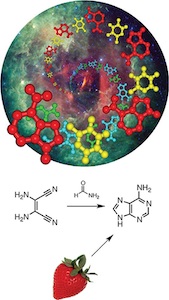

I was involved with the early development of chemistry for a teaching laboratory in a summer program (2008) with two K-12 teachers visiting Georgia Tech as part of the Center for Chemical Evolution. This team, led by high school instructor Lakshmi Anumukonda, went on to develop a full protocol and publish their teaching lab in the Journal of Chemical Education. The laboratory Anumukonda and colleagues developed involved obtaining the nucleobase adenine from two sources: isolation from strawberries and preparation from formamide by heating. Students then go on to use chromatography to analyze these samples and show that the same biomolecule can be obtained from living or non-living sources. Thus, they are educated in chromatography, as well as a simple reaction with potential relevance to life’s origins.